Cymatics and sacred geometry reveal how sound, vibration, and mathematical patterns intertwine to create the fabric of reality we observe around us daily.

🔮 The Ancient Wisdom Meets Modern Science
Throughout history, mystics, philosophers, and scientists have pondered the hidden connections between sound, form, and consciousness. Today, we stand at a fascinating crossroads where ancient wisdom intersects with cutting-edge scientific research. Cymatics—the study of visible sound and vibration—provides tangible proof of what spiritual traditions have taught for millennia: everything in the universe is fundamentally vibrational in nature.
Sacred geometry, meanwhile, represents the blueprint of creation itself. From the spiraling patterns of galaxies to the intricate structure of a snowflake, these mathematical principles appear consistently throughout nature. When combined with cymatics, we gain unprecedented insight into how vibration literally shapes matter into recognizable patterns that mirror the geometric forms revered across cultures.
What Exactly Is Cymatics?
The term “cymatics” derives from the Greek word “kyma,” meaning wave. Swiss physician Hans Jenny coined this term in the 1960s when he conducted groundbreaking experiments demonstrating how sound frequencies create specific geometric patterns in various mediums. By placing sand, water, or other substances on metal plates and exposing them to different sound frequencies, Jenny revealed that each frequency produced distinct, repeatable patterns.
These aren’t random formations—they’re highly organized structures that change predictably as frequencies shift. Lower frequencies create simpler patterns, while higher frequencies generate increasingly complex geometric designs. This discovery bridges the gap between the invisible world of sound and the visible realm of form, offering a window into the fundamental organizing principles of nature.
The Mechanics Behind the Magic
When sound waves travel through a medium, they create areas of compression and rarefaction—regions where particles gather densely and areas where they spread apart. In cymatic experiments, particles naturally migrate to nodes (areas of minimal vibration) and avoid antinodes (areas of maximum vibration). This self-organizing behavior creates the stunning patterns we observe.
The phenomenon operates on principles of resonance and standing waves. When a frequency matches the natural resonant frequency of a system, the vibrations amplify, creating stable, visible patterns. This same principle explains why opera singers can shatter glass and why bridges can collapse when soldiers march in step across them.
📐 Sacred Geometry: The Language of the Universe
Sacred geometry encompasses the fundamental shapes and proportions that appear consistently throughout nature, art, and architecture. These aren’t merely aesthetic choices—they represent the mathematical relationships that govern physical reality. The most prominent examples include the Flower of Life, Metatron’s Cube, the Fibonacci sequence, the Golden Ratio, and Platonic solids.
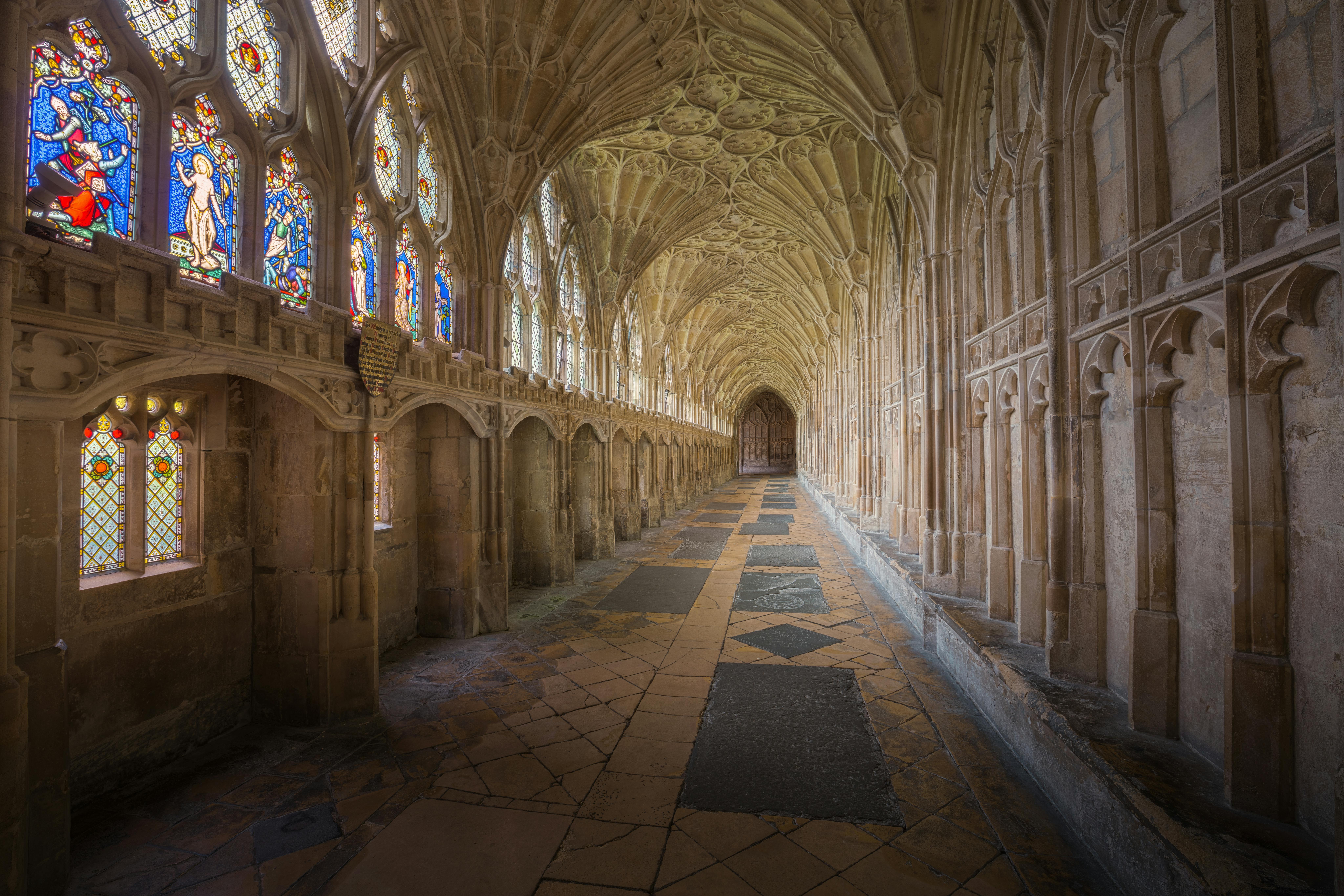
Ancient civilizations incorporated these patterns into temples, monuments, and sacred art not simply for decoration, but because they understood these forms held special properties. The Great Pyramid of Giza, Stonehenge, and countless cathedrals worldwide demonstrate precise mathematical relationships that align with cosmic proportions and harmonic frequencies.
The Platonic Solids and Vibrational Geometry
The five Platonic solids—tetrahedron, cube, octahedron, dodecahedron, and icosahedron—represent the only three-dimensional shapes where all faces, edges, and angles are identical. Ancient Greek philosophers, particularly Plato, associated these forms with the classical elements: fire, earth, air, ether, and water respectively.
Remarkably, cymatic experiments consistently produce patterns that mirror these geometric forms when specific frequencies are applied. This suggests that the Platonic solids aren’t arbitrary constructs but rather represent fundamental vibrational states that matter can assume under specific conditions.
🌊 The Convergence: Where Cymatics Meets Sacred Geometry
The most profound revelation occurs when we recognize how cymatic patterns precisely replicate the sacred geometric forms found throughout nature and ancient wisdom traditions. This isn’t coincidence—it’s evidence of a unified principle underlying both sound and form. When water is subjected to particular frequencies, it arranges itself into hexagonal patterns resembling the Flower of Life. Sand creates mandalas that mirror those drawn by Buddhist monks.
This convergence suggests that sound frequencies may be the mechanism through which geometric information translates into physical form. In other words, vibration might be the creative force that organizes matter according to mathematical principles inherent in the fabric of spacetime itself.
The Flower of Life: A Cymatic Blueprint
The Flower of Life pattern—consisting of multiple evenly-spaced, overlapping circles—appears in cymatic experiments with remarkable consistency. This same pattern decorates ancient Egyptian temples, appears in Leonardo da Vinci’s notebooks, and forms the basis for numerous sacred geometric constructions including Metatron’s Cube.
Some researchers theorize that the Flower of Life represents the vibrational template for all biological life. The pattern contains the genesis of cellular division and the mathematical proportions found in DNA structure. When sound creates this pattern in water—and considering that our bodies are approximately 70% water—we glimpse how vibration might influence biological systems at the most fundamental level.
Scientific Foundations and Research
While cymatics may seem mystical, it rests on solid scientific principles. Acoustic physics, fluid dynamics, and wave mechanics all contribute to our understanding of these phenomena. Modern researchers use sophisticated equipment including Chladni plates, tonoscopes, and computer modeling to explore these patterns with unprecedented precision.
Studies have documented how different frequencies affect cellular behavior, crystal formation, and even consciousness. Dr. Masaru Emoto’s controversial water crystal experiments suggested that sound, words, and intentions could influence water’s molecular structure—though these findings remain debated in scientific circles, they’ve inspired further investigation into vibrational effects on matter.
Practical Applications in Modern Technology
The principles of cymatics extend far beyond artistic expression or spiritual contemplation. Medical ultrasound uses sound waves to image internal body structures and even break up kidney stones. Acoustic levitation employs standing waves to suspend and manipulate small objects without physical contact. Scientists are exploring cymatic principles for targeted drug delivery, non-invasive surgery, and advanced manufacturing techniques.
In materials science, researchers use vibration to arrange particles into desired patterns, creating novel structures with specific properties. This technology could revolutionize everything from electronics manufacturing to tissue engineering. The ability to organize matter through frequency offers extraordinary possibilities for future innovation.
🎵 Frequency, Consciousness, and Healing
If vibration shapes physical matter so dramatically, what effects might it have on human consciousness and wellbeing? Sound healing practices across cultures suggest that specific frequencies can influence mental states, emotional balance, and physical health. Modern research increasingly supports these traditional applications.
Binaural beats, Solfeggio frequencies, and Schumann resonance entrainment have gained attention for their potential to reduce anxiety, improve focus, and promote healing. While mechanisms remain under investigation, evidence suggests that sound can influence brainwave patterns, cellular function, and even gene expression.
The 432 Hz Controversy and Natural Resonance
Proponents of 432 Hz tuning argue this frequency resonates with natural harmonic patterns in nature, creating more pleasing and potentially therapeutic music compared to the standard 440 Hz tuning. While scientific consensus remains elusive, cymatic experiments show that 432 Hz does produce notably harmonious patterns.
Whether this frequency holds special properties or simply represents one of many beneficial sound relationships continues to spark debate. What’s clear is that different frequencies generate different effects on matter and potentially on biological systems including humans.
Creating Your Own Cymatic Experiences
You don’t need expensive laboratory equipment to explore cymatics personally. Simple experiments can reveal these fascinating patterns right at home. A speaker, tone generator app, and a shallow dish of water or sand provides everything needed to witness sound made visible.
Start with low frequencies around 40-60 Hz and gradually increase, observing how patterns transform. Try different mediums—cornstarch mixed with water (oobleck), salt, powder, or even milk. Each material responds uniquely to vibration, revealing different aspects of wave behavior and pattern formation.
Building a Simple Chladni Plate
A Chladni plate—named after Ernst Chladni, the “father of acoustics”—consists of a thin metal or glass plate that vibrates when stimulated by sound. Here’s a basic approach:
- Obtain a thin metal plate or use the bottom of a metal can
- Attach it firmly to a speaker cone or use a violin bow on the edge
- Sprinkle fine sand, salt, or powder evenly across the surface
- Generate tones at various frequencies or draw the bow across the plate edge
- Watch as particles migrate to nodes, forming intricate geometric patterns
This simple setup demonstrates the same principles Hans Jenny used in his pioneering research, making the invisible world of vibration tangible and observable.
🌟 Implications for Understanding Reality
The convergence of cymatics and sacred geometry suggests profound implications for how we understand reality itself. If sound and vibration can organize matter into predictable geometric patterns, might vibration be the fundamental creative force in the universe? Could the “music of the spheres” described by ancient philosophers be more than metaphor?
String theory in physics proposes that fundamental particles are actually tiny vibrating strings, with different vibration modes corresponding to different particles. This cutting-edge physics eerily echoes ancient mystical teachings about sound as the primordial creative force—the “Word” that brought forth creation.
Bridging Science and Spirituality
Cymatics offers a rare meeting ground where scientific materialism and spiritual philosophy find common language. The patterns are objectively measurable and reproducible, satisfying scientific rigor. Yet they also demonstrate principles that mystics have intuited for millennia—that consciousness, intention, and vibration shape reality at fundamental levels.
This doesn’t require abandoning critical thinking or embracing pseudoscience. Rather, it invites an expanded perspective that honors both empirical evidence and subjective experience, recognizing that reality may be far more participatory and responsive than classical physics suggested.
The Future of Cymatic Research
As technology advances, our ability to explore cymatic phenomena grows exponentially. High-speed cameras capture pattern formation in unprecedented detail. Computer modeling simulates complex vibrational interactions. Quantum acoustic research investigates how sound behaves at the smallest scales of reality.
Emerging fields like archaeoacoustics examine how ancient structures may have been designed with acoustic properties that induced specific consciousness states. Researchers document resonant frequencies in stone circles, pyramids, and temples worldwide, suggesting our ancestors possessed sophisticated understanding of sound’s effects on human experience.
The integration of cymatics with artificial intelligence and nanotechnology promises revolutionary applications. Imagine manufacturing processes where products literally sing themselves into existence, or medical treatments that use precisely tuned frequencies to repair tissues at the cellular level. These scenarios move from science fiction toward science fact as our understanding deepens.
🎨 Artistic Expression and Cultural Impact
Beyond scientific and practical applications, cymatics has profoundly influenced contemporary art and music. Visual artists create installations where audiences see sound transformed into dynamic, evolving geometric forms. Musicians explore how different compositions create distinct visual patterns, adding a new dimension to musical expression.
This aesthetic dimension reminds us that truth, beauty, and meaning intertwine in ways that transcend purely rational analysis. The patterns cymatics reveals aren’t merely mathematically interesting—they’re profoundly beautiful, suggesting that aesthetic appeal and fundamental truth may be more intimately connected than we typically recognize.
Awakening to Vibrational Reality
Understanding cymatics and sacred geometry transforms how we perceive everyday experiences. That song that gives you chills? It’s creating specific geometric patterns in the water that comprises your body. The architecture that feels sacred or inspiring? It likely incorporates proportions that resonate with your biological systems at deep levels.
Even language takes on new significance when we consider that every word creates specific vibrational patterns. Ancient traditions that emphasized sacred sounds, mantras, and prayers may have intuited what cymatics now demonstrates—that sound literally shapes reality, including the reality of our bodies and consciousness.
This awareness empowers us to become more conscious creators, choosing sounds, music, and even words more intentionally. If vibration influences matter so profoundly, then our acoustic environment—the soundscape we inhabit daily—deserves thoughtful consideration as a factor influencing wellbeing and consciousness.
The journey into cymatics and sacred geometry reveals that mysticism and science need not conflict. Instead, they offer complementary perspectives on the magnificent, vibrational nature of reality. As we continue exploring these frontiers, we participate in humanity’s ancient quest to understand our place in the cosmic symphony—a quest that’s simultaneously deeply scientific and profoundly spiritual. The patterns that emerge from sound remind us that we live in a universe of exquisite order, where beauty, mathematics, and consciousness dance together in eternal, harmonic creation.